

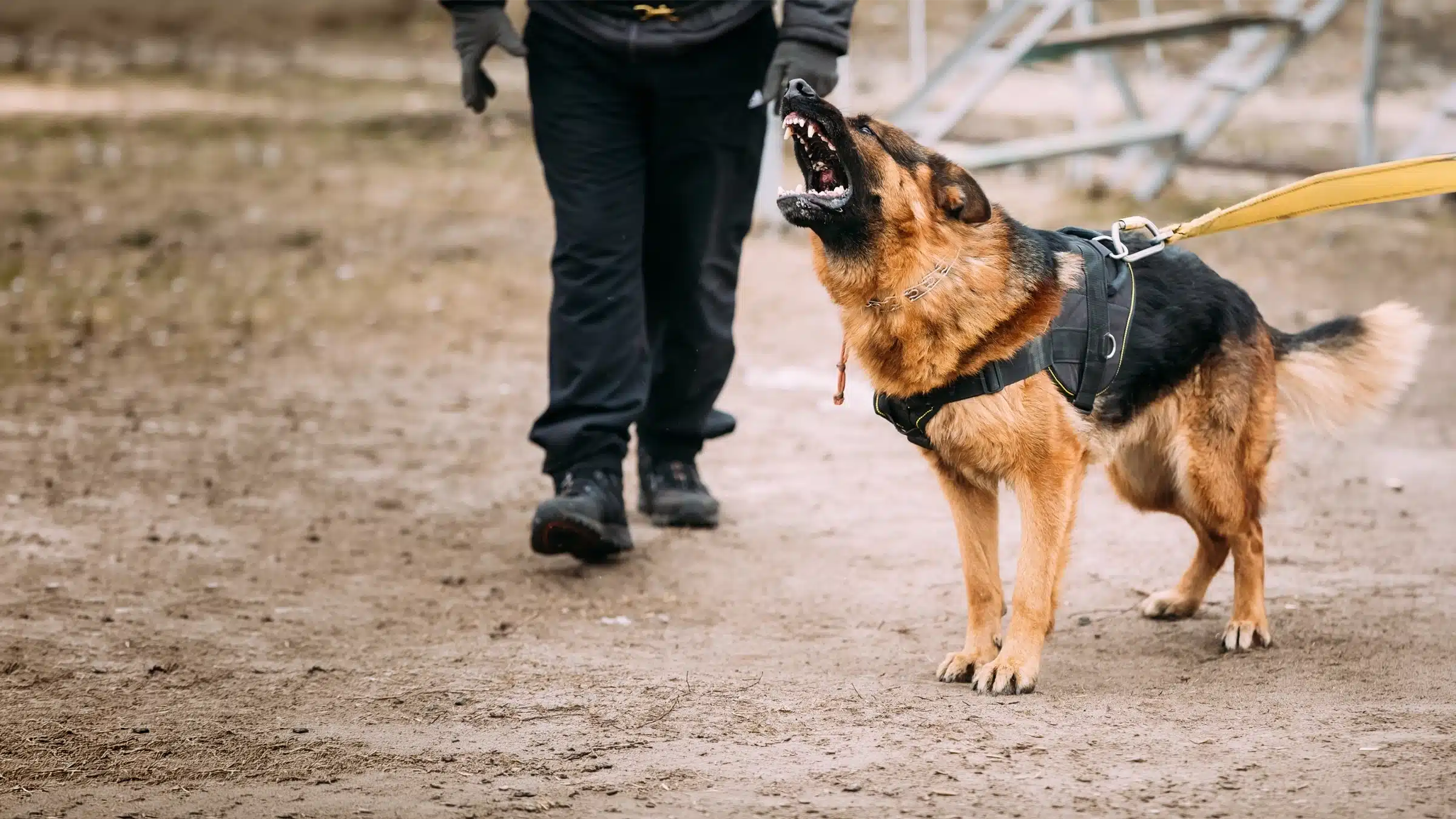
When Everyday Life With Your Dog Becomes Difficult
Dog reactivity training Toronto dog owners can rely on begins with understanding the behaviour, the triggers and the individual dog. Structured, individualized dog reactivity training in Scarborough, Toronto for dogs struggling with aggression, fear, poor impulse control and difficult behaviour around dogs, people or everyday environments.
Every dog is assessed individually. Training recommendations depend on the dog’s history, behaviour, environment and owner participation.
Reactivity Isn't Just Bad Behaviour.
The barking, lunging or loss of control you see is often only the behaviour happening on the surface.
Reactive behaviour can develop for different reasons and may appear around dogs, people, unfamiliar environments or specific situations. Understanding what triggers the behaviour is an important part of determining how training should move forward.
Captain K9 approaches each dog individually rather than treating reactivity as a single problem with a single solution. The dog's history, behaviour, environment and relationship with the handler all help shape the training approach.
Dog Reactivity
Intense responses when seeing, approaching or passing other dogs.
People Reactivity
Difficult behaviour around strangers, visitors or unfamiliar people.
Fear & Anxiety
Behaviour associated with stressful environments, unfamiliar situations or specific triggers.
Impulse Control
Difficulty maintaining engagement or responding reliably when excitement and stimulation increase.
Understand First. Train With Purpose.
Behaviour modification begins with understanding the dog in front of us — not forcing every dog through the same training formula.
Before developing a training plan, Captain K9 looks at the behaviour itself, the situations that trigger it, the dog's history, the handler's communication, and how the behaviour affects everyday life.
Understand the Dog
Identify behavioural patterns, triggers, handling challenges and the situations in which the dog struggles most.
Build Clearer Responses
Establish clearer communication between dog and handler while developing engagement, boundaries and more reliable responses.
Train Around Real Triggers
Introduce controlled challenges gradually so training can begin transferring into the situations the dog encounters in everyday life.
Give Owners a System
Teach owners how to continue the structure, communication and management needed beyond the training environment.
Not a dog that performs perfectly inside a training facility — but a dog and handler who can function more successfully together in everyday life.
One Behaviour. Four Parts Of The Solution.
Captain K9's established training framework brings together four connected elements that influence how dogs learn, respond and function in everyday life.
Developed through years of practical application, the T.H.E.M. approach looks beyond a single behaviour to consider the training, the person handling the dog, the equipment being used and the management required outside formal training sessions.
What The Dog Learns
Building clearer responses, useful behaviours and skills that can be applied beyond the training environment.
What The Handler Learns
Helping owners develop clearer communication, better timing and more confident handling around challenging situations.
The Tools Supporting The Work
Selecting and using appropriate training and handling equipment according to the individual dog, handler and training situation.
What Happens Between Sessions
Creating practical routines and boundaries that help owners manage behaviour consistently in everyday environments.
Training changes more when the dog, the handler, the tools and the environment work together.
Reactivity Is Not Always Aggression.
A Reaction Has A Reason.
Barking, lunging, fixation or intense excitement around dogs, people or other stimuli does not automatically mean a dog is aggressive. Dog reactivity training Toronto owners seek often begins with understanding whether the behaviour is driven by fear, frustration, excitement, aggression, or another underlying cause.
Reactive behaviour may be influenced by fear, frustration, excitement or other triggers. Understanding what is driving the response helps determine how training should move forward.
Similar Behaviour. Different Motivation.
Aggressive behaviour can have different motivations and should be considered in the context of the individual dog, its history, environment and the circumstances in which the behaviour occurs.
Rather than assuming every intense response has the same cause, Captain K9 begins by assessing the behaviour and the situations surrounding it.
Similar behaviour on the surface can have very different causes underneath.
Not Every Behaviour Requires The Same Approach.
Behaviour training is structured according to the type of behaviour, its severity and how established the underlying pattern has become.
Every dog begins with an assessment so Captain K9 can understand the behaviour, determine the appropriate training level and recommend how many sessions may be required.
Foundational behaviour challenges that can affect everyday routines, handling and household manners.
- Potty Training
- Crate Training
- Jumping
- Leash Pulling
- Counter Surfing
- Mouthing
More established behaviours that can become increasingly difficult to manage without structured intervention.
- Destructive Behaviour
- Submissive Urination
- Territorial Marking
- Leash Biting
- Digging
- Mounting / Humping
Complex behaviour requiring careful assessment, structured handling and individualized training strategies.
- Reactivity
- Aggression
- Separation Anxiety
- Running Away / Recall
- Vehicle & Animal Chasing
- Excessive Barking / Over-Excitement
Behaviour severity and how established the underlying pattern has become will influence the number of sessions recommended. Minimum age for behaviour rehabilitation programs is 7 months.
Behaviour Doesn't Fit Into One Box.
What looks like the same behaviour on the surface can develop for very different reasons.
Explore some of the behaviour challenges Captain K9 works with. Every dog is assessed individually so the training approach can reflect the dog, the circumstances and the behaviour being addressed. Dog reactivity training Toronto dog owners can turn to should begin by understanding why the dog is reacting. Fear, frustration and excitement can all contribute to intense responses toward other dogs, people or environmental stimuli.
A Reactive Dog Is Not Necessarily An Aggressive Dog.
Dogs may show intense reactions toward other dogs, people or environmental stimuli for different reasons. Fear, frustration and excitement can all contribute to reactive behaviour.
Captain K9 looks beyond the visible reaction to understand the circumstances surrounding it before determining how training should move forward.
- Other dogs
- Unfamiliar people
- Leash encounters
- Barriers
- Busy environments
Behaviour Must Be Understood In Context.
Aggressive behaviour can have different motivations. Fear may play a role, while other behaviour may be connected to guarding, learned patterns or predatory responses.
Captain K9 assesses the individual dog, its history and the situations in which the behaviour occurs before developing an appropriate training strategy.
- Dog-directed aggression
- Human-directed aggression
- Resource guarding
- Territorial behaviour
- Context-specific aggression
Independence Can Be Developed.
Some dogs experience significant distress when separated from their owner or familiar environment.
The behaviour can appear as restlessness, vocalization, destructive behaviour, house-soiling or attempts to escape. Understanding the dog's individual pattern is an important part of determining the appropriate approach.
- Restlessness
- Excessive vocalization
- Destructive behaviour
- House-soiling
- Escape attempts
Freedom Requires Reliable Recall.
A dog that darts through doors, ignores recall or becomes difficult to reach once distracted can quickly create stressful and potentially dangerous situations.
Training focuses on developing clearer communication and a more reliable response when the dog is called.
- Door darting
- Ignoring recall
- Environmental distraction
- Running toward dogs or people
- Difficulty disengaging
Excitement Can Become Difficult To Control.
Excessive barking and escalating excitement can make everyday situations difficult, particularly in apartments, condominiums and busy households.
Training looks at what triggers the behaviour and how the dog responds so owners can develop more effective communication and management.
- People outside
- Doorbells and visitors
- Other dogs
- Environmental noises
- High excitement
Movement Can Be A Powerful Trigger.
Cars, trucks, squirrels, birds and other moving animals can trigger intense chasing behaviour in some dogs.
Because these situations can present significant safety risks, Captain K9 considers both training and practical management when working with chasing behaviour.
- Cars and trucks
- Squirrels
- Birds and geese
- Small animals
- Fast movement
Don't Just Read About It. See The Work.
Behaviour Work In Real Time.
Behaviour training is difficult to understand from claims alone. Real training footage allows owners to see how Captain K9 works with dogs, handlers and challenging situations.
As this library grows, selected cases will show different behavioural challenges, training stages and practical applications of the T.H.E.M. approach.
Dog Reactivity
Controlled exposure, clearer handler communication and structured work around other dogs.
Handler Development
Helping owners understand timing, communication and management so progress can continue outside the training facility.
Training is easier to trust when you can see the process for yourself.
Behaviour Work Isn't Theory.
For more than two decades, Captain K9 has worked with dogs displaying a wide range of behavioural challenges, from everyday handling issues to more complex reactivity and aggression.
That practical experience has helped shape the individualized approach and T.H.E.M. framework used throughout Captain K9 behaviour programs.
Practical dog training experience.
Assisted with training and behaviour challenges.
Training, Handling, Equipment and Management working together.
Training designed to carry into everyday life.
Experience Matters When Every Dog Presents A Different Problem.

Every Dog Starts Somewhere Different.
You don't need to decide whether your dog's behaviour is common, critical or severe before contacting Captain K9.
Tell us about your dog, the behaviour you're experiencing and the situations in which it happens. Your answers help Captain K9 understand the background before your assessment and determine the most appropriate next step.
Every case is reviewed individually.
Questions Before You Start?
Yes. Behaviour cases are assessed individually before a training recommendation is made. The assessment helps Captain K9 understand the dog's history, the behaviour being experienced and the situations in which it occurs.
There is no fixed number of sessions for every dog. The severity of the behaviour, how long it has been established, the dog's history and the owner's participation can all influence the training process.
No. Reactive behaviour can be influenced by fear, frustration, excitement or other triggers and does not automatically mean a dog is aggressive. Understanding the motivation and context behind the behaviour is an important part of the assessment.
Captain K9 works with a range of behavioural cases, including dogs with previous incidents. Any relevant history should be disclosed during the assessment so the situation can be reviewed appropriately before training begins.
Owner participation is an important part of behaviour training. Handling, communication and management continue outside the training facility, so owners need to understand how to apply the work consistently in everyday life.
Captain K9's current behaviour rehabilitation program is intended for dogs approximately seven months of age and older. Younger dogs may be better suited to puppy or obedience training depending on the behaviour being experienced.